


2026 Conference

About the Conference
CT NOFA is proud to present our 44th Winter Conference, featuring a series of virtual workshops on March 3-5 in the lead up to our full day, in-person gathering and celebration on March 7, 2026 at Wesleyan University in Middletown, Connecticut.
We'll be offering a variety of workshops, covering topics such as farming, organic land care, government policy, homesteading and gardening, food equity and justice, and more, including a soon-to-be-announced keynote speaker. Our in-person celebration will also feature the presentation of the Bill Duesing Organic Living on the Earth award and our members' annual meeting.

Why attend the CT NOFA Winter Conference? Let our attendees tell you, in their own words.
Plan Your day
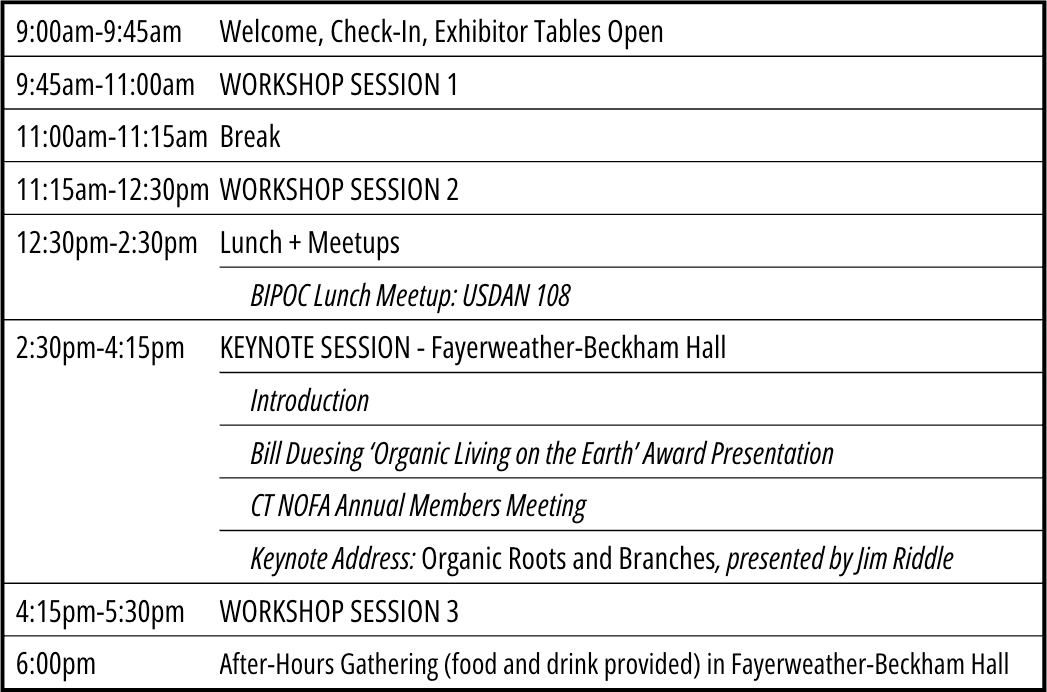
Make those most of your time at our winter conference by planning out your day. Click here for information about workshop schedules (both virtual and in-person), driving and parking directions, tables and clinics information, and more.
workshop schedule


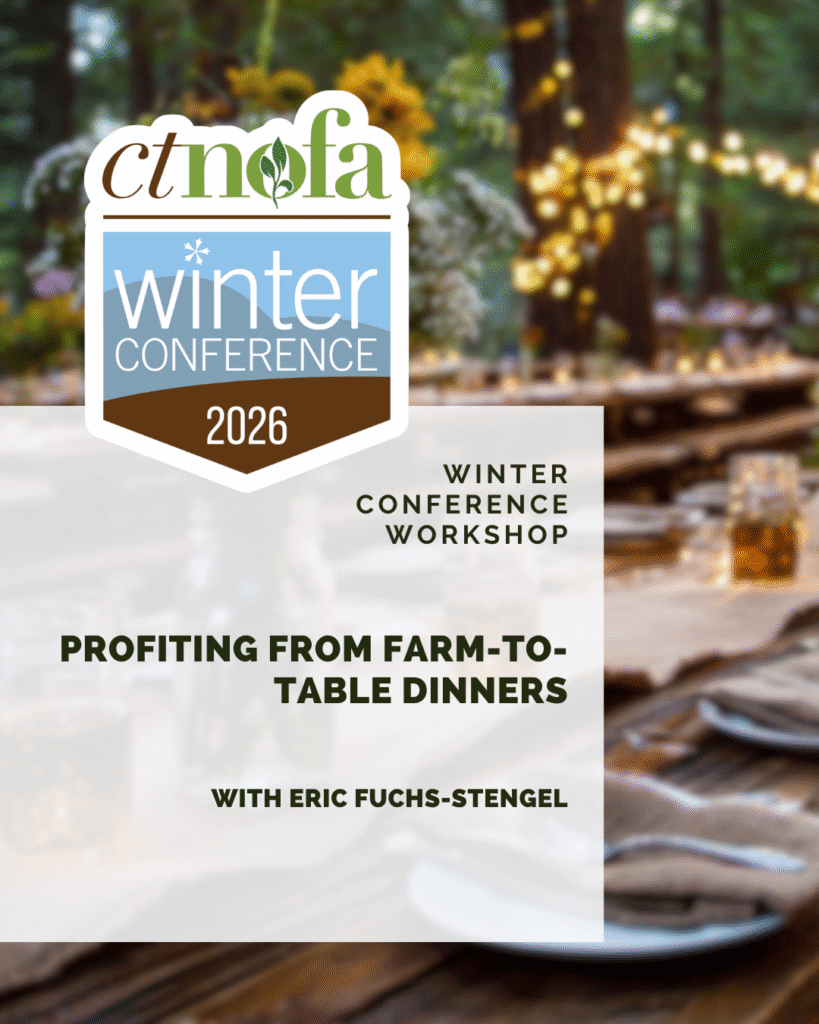


The heart of the CT NOFA Winter Conference is our slate of workshops. Run over the course of 3 days of virtual sessions (March 3-5) and throughout our in-person conference (March 7), this year's workshops will cover:
- Beginning farmer topics
- Transitioning to organic farming
- Organic land care
- Policy and advocacy
- Gardening and homesteading
- Livestock management
- And more!
Completed a workshop? Let us know your thoughts. Attendees may fill out the workshop evaluation form once for each workshop they attend.
What did you think of the 2026 Winter Conference? We appreciate your overall feedback about this year's event.
EXHIBITOR FAIR

Each year, our winter conference features local food producers, craftspeople, agricultural contractors and service providers, and more throughout the day of the conference at our exhibitor fair. Attendees are invited to visit them between workshop sessions, during lunch, and before and after the conference to explore what our state's businesses and organizations have to offer.
KEYNOTE SPEAKER

For more than 40 years, Jim Riddle has been a leader in the organic community, as a farmer, inspector, educator, activist, and policy specialist. During our keynote, Jim will discuss the deep roots of the organic movement – what inspired it, how it has evolved, and where it is today – and share scenes from organic farms around the world. Be prepared for an entertaining, enlightening, and thoughtful time, as Jim takes us on a journey through the organic world, near and far.
Jim Riddle grew up with organic values on a small farm in Iowa. He and his wife grew perennial fruits at Blue Fruit Farm in Minnesota and started their local farmers market in the 1980s, before “local food” gained prominence. Jim worked as an organic inspector for 20 years and was founding president of the International Organic Inspectors Association. He has trained organic inspectors and spoken at organic conferences throughout the U.S., Canada, Latin America, Japan, Australia, Russia, Iran, Europe, Jamaica, and more. Jim served as chair of the National Organic Standards Board and originated the organic certification cost share program. Jim and his wife, Joyce Ford, are retired and now live in New Hampshire, where they serve as mentors in the Transition to Organic Partnership Program (TOPP).
events, clinics, and gatherings
soil health table

seed swap table

how it works
If you have extra seeds, label them clearly with the variety, year harvested, and any growing notes. Organic, untreated, and non-GMO seeds are encouraged.
If you’re contributing seeds, make sure they are labeled. Blank packets are available if needed. Place your seeds on the table for others to find.
Look through the available seeds and take what interests you. Use the provided empty packets and measuring spoons to portion seeds responsibly — leave enough for others!
Not sure what to take? Ask a fellow attendee! This is a great place to learn about new varieties and growing techniques.
Take your seeds home and plant them! If you have extra seeds left at the end, consider leaving them to share with others beyond the conference.
lunch meetups
Like-minded individuals from across our region rarely have the time to come together during the growing season. The CT NOFA Winter Conference offers them the chance to connect for both social and professional reasons. The following groups have rooms set aside during the conference lunch period to gather, connect and reconnect, and break bread.
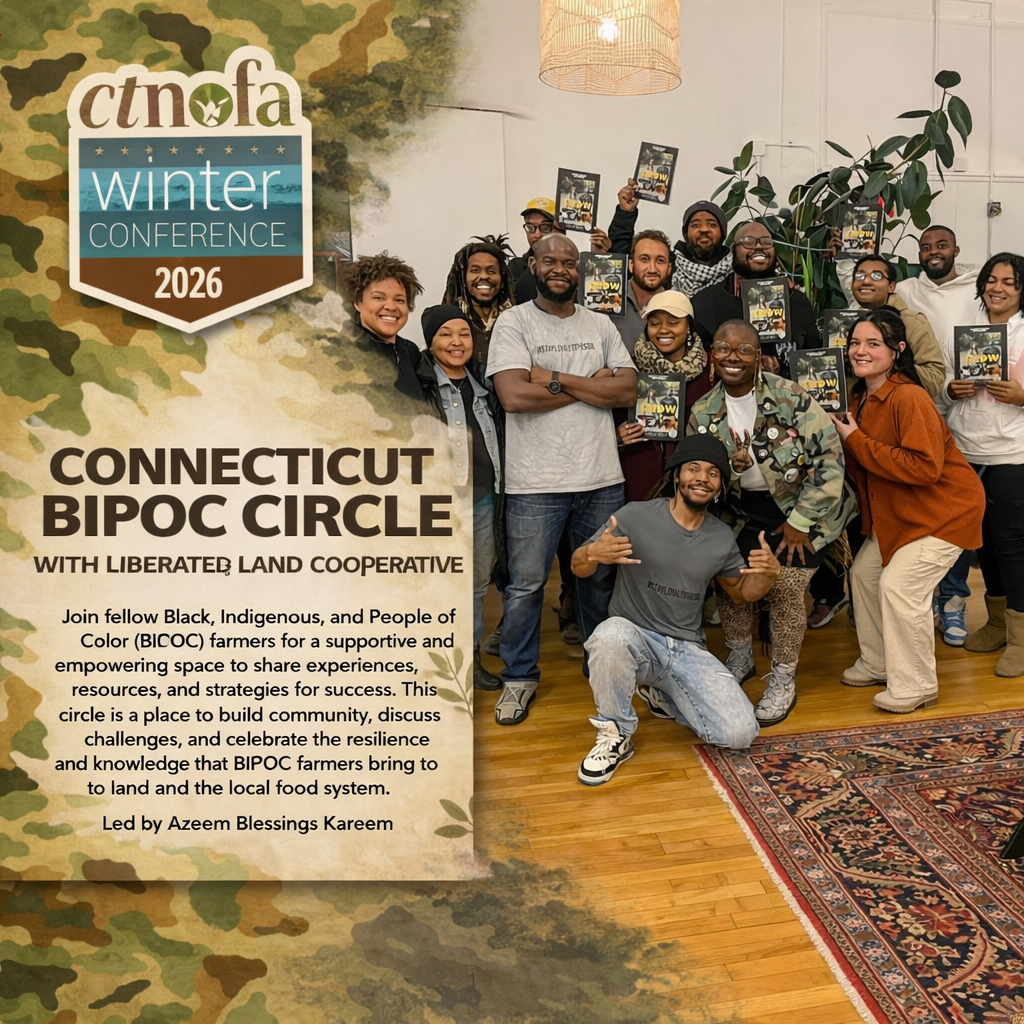
BIPOC Farmers Circle
Join fellow Black, Indigenous, and People of Color (BIPOC) farmers for a supportive and empowering space to share experiences, resources, and strategies for success. This circle is a place to build community, discuss challenges, and celebrate the resilience and knowledge that BIPOC farmers bring to the land and the local food system. Led by Azeem Blessings Kareem from Samad Gardens Initiative.
cabbage moth story hour / after hours gathering
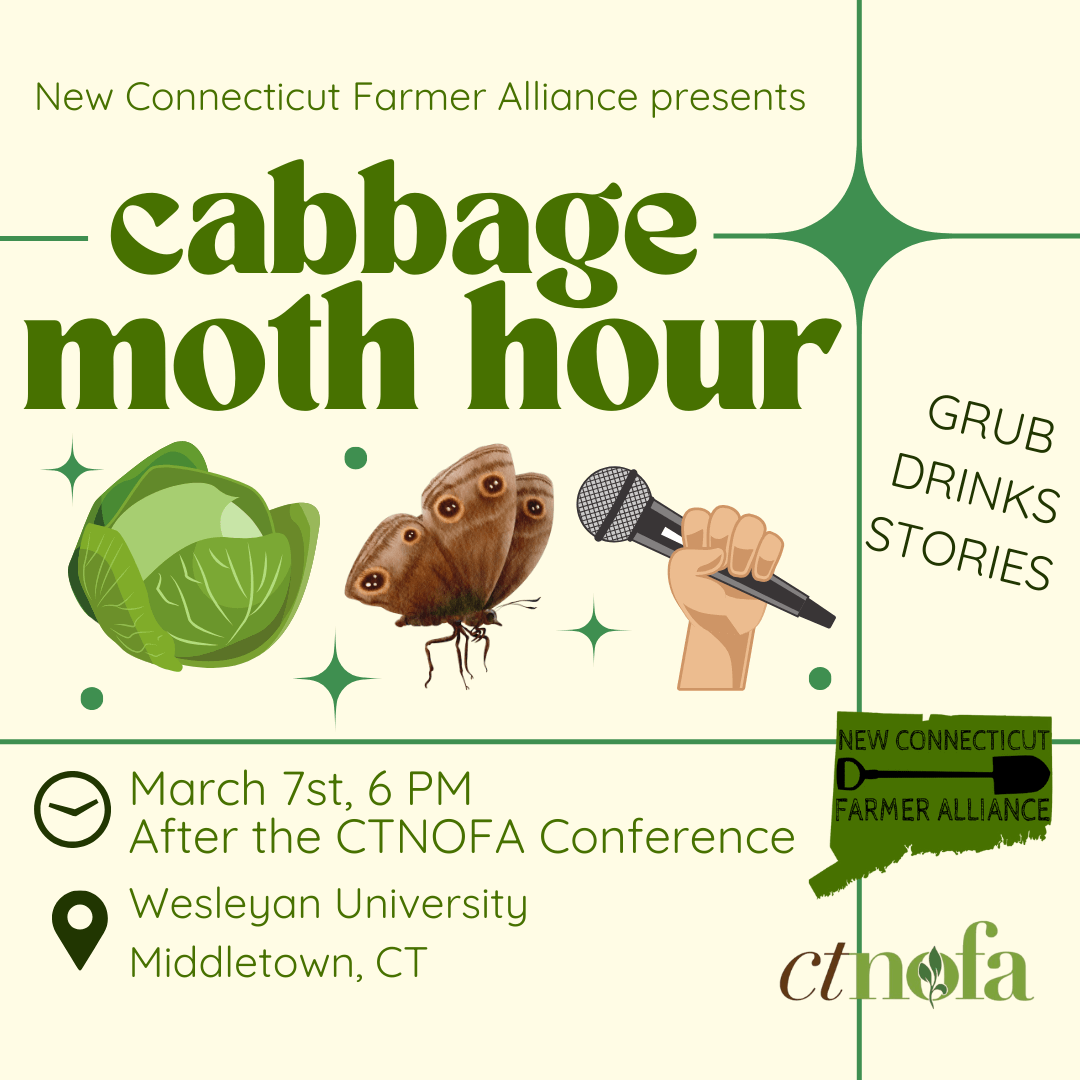
Join us after the conference for food, drink, and the New Connecticut Farmers Alliance's famous Cabbage Moth Story Hour! Farmers are invited to take the stage and share a farm-related story: the time you had to chase your chickens across town, your craziest farm injury, your moment of agricultural inspiration, etc. Time limit is 5 minutes.
This gathering will take place in Beckham Hall at Wesleyan University shortly after the conclusion of the final workshop sessions.
THE BILL DUESING ORGANIC LIVING ON THE EARTH AWARD

This award is for a recipient who has demonstrated the advancement of organic living on the earth with a project, innovation, action, or lifestyle that supports the continuation of the life work of CT NOFA's founder, Bill Duesing – for all to live on this earth in a society in harmony with nature. The accomplishment must contribute to the advancement of organic living in Connecticut in a demonstrable way and be a current or recent accomplishment that reflects Bill’s devotion to organic living and his wish that this critically important work be continued by his friends and colleagues. Award recipients, who will be announced and honored at the Winter Conference, can be one of the following:
- Organic farmer/farm (examples: new, young, and/or seasoned farmers added new revenue sources to secure the farm’s future; expanded availability of organic food in the community; added carbon sequestration measures on the farm, e.g. cover-crops, no-till)
- Organic land care professional / business (examples: new, young, and/or seasoned land care professionals transitioned from conventional to organic land care; added carbon sequestration measures, e.g. replacing lawn with meadow, etc.)
- Organic advocate (example: spearheaded a change in their local school system, worked to promote organic legislation, or supported healthy soil legislation)
- Organization (example: farmers market became 100% organic; the advancement of farmworkers’ rights; created organic-based social media group)
- Educator (example: developed new ways to add organic food and agriculture to school curriculum)
- Mentor (example: developed process for passing along organic knowledge and skills to new farmers or land care professionals)
- Media specialist (examples: used digital media including blogs or social media, or traditional media such as radio or print, to spread the word about organic living in Connecticut; the life work of Bill Duesing and his enduring influence; current organic initiatives, etc.)
Conference News & announcements

Bill Duesing Award Committee Seeks New Members
The Bill Duesing Award Committee seeks new members to continue the tradition of selecting our annual Bill Duesing Award winner. Committee members are expected to be actively involved with and knowledgeable about the sustainable and organic agriculture community in Connecticut. Members are required to meet three times a year in advance of the CT NOFA Winter Conference (typically in December, January, and February) to conduct the work of identifying candidates for the award and ultimately selecting that year’s awardee.
- « Previous
- 1
- 2