
Creating “The Ecotype Project”

July 1, 2019
The news of the “insect apocalypse” has made it into main-stream media, and an article in the New York Times last November shook many of its readers. We all can recognize when we look out at our farms and gardens that our successes, indeed for some of us our livelihoods, are intertwined with the work of these tiny partners. Scientists like Doug Tallamy refer to insects as “the little things that run the world.” Thus enthroned, the good bugs (pollinators, beneficials, etc.) have taken center stage at CT NOFA this year.
We have launched several programs to support our farmers, gardeners, and landscapers in increasing the number of native plants in our state: thus restoring habitat and protecting our food supply. Taking on an ecological challenge of apocalyptic proportions is no small task – and so we can’t do it alone. We have turned to our partners at The CT Agricultural Experiment Station, the CT Department of Agriculture, Pollinator Pathway, Xerces Society and many others to shape a plan for the long-term ecological health of our crops.
Habitat restoration
Plants are food and shelter. If they are not being eaten or nested in by someone then they are not serving their true purpose. Using the native plant nursery produced by John Campanelli, a doctoral researcher at the University of Connecticut, CT NOFA and the Pollinator Pathway have teamed up to build out 30 (so far) native plant habitat projects in public gardens and on community farms. The ecological services of these habitats support fruit and vegetable crop growers throughout the region. Follow our work on instagam and facebook to see these initial habitats taking flight.
Local ecotypes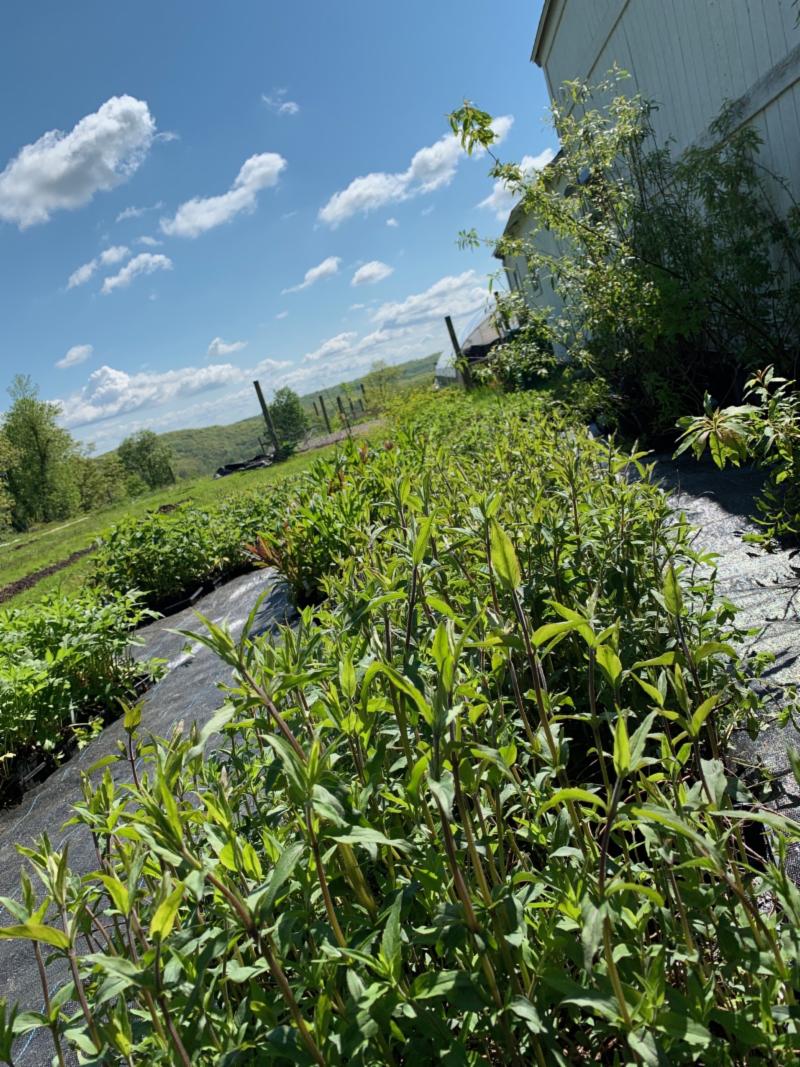
Locally adapted species have a better chance of success: it’s all part of our “right plant in the right place” philosophy. For increased climate change resilience, Connecticut’s own wild varieties need to be captured and cultivated for service in Connecticut’s habitat restoration. We are working with conservationists and wild seed foragers to find and protect Connecticut ecotypes of native plants.
Living Seed Bank
We have launched the a Living Seed Bank project as a way of developing reliable farmer partners in the seed production of native plants. From home gardeners to nursery growers, the collection, protection, and promotion of our local ecotypes will be central to the success of our pollinator habitat restoration projects moving forward.
Let us be the beacons in our communities, in our ecosystems, for safe-haven. Organic farms and gardens employing native plant habitat initiatives can become sanctuaries for the insects upon which we all depend.
Posted in The Ecotype Project
Recent Posts

Support the Organic Agriculture Movement – Become a Sponsor of the 2027 CT NOFA Winter Conference
The organic agriculture movement may not be a new phenomena, but it is a vital one. Help support that movement by becoming a sponsor of our 2027 Winter Conference. In addition to helping us continue the fight for organic agriculture, you’ll enjoy numerous benefits leading up to and at the conference.

Call for Exhibitors at CT NOFA’s 2027 Winter Conference
Join us at CT NOFA’s 45th annual Winter Conference on March 13, 2027 to connect with 300+ farmers, home gardeners, and organic advocates from across the region. Agricultural industry suppliers, education and resource-providing organizations, environmental conservation groups, and others are invited to register for an exhibitor table.